Rippling Platform
Unifying 20+ products into a coherent system without flattening what makes each one useful.
Rippling grew from a single HR product to a suite of 20+ applications. Each was built by a separate team, on a separate timeline, with separate interaction patterns. Customers loved the depth but struggled to move between them. I led the platform design effort to create a shared structural layer that unified the experience without forcing every product into the same mold.
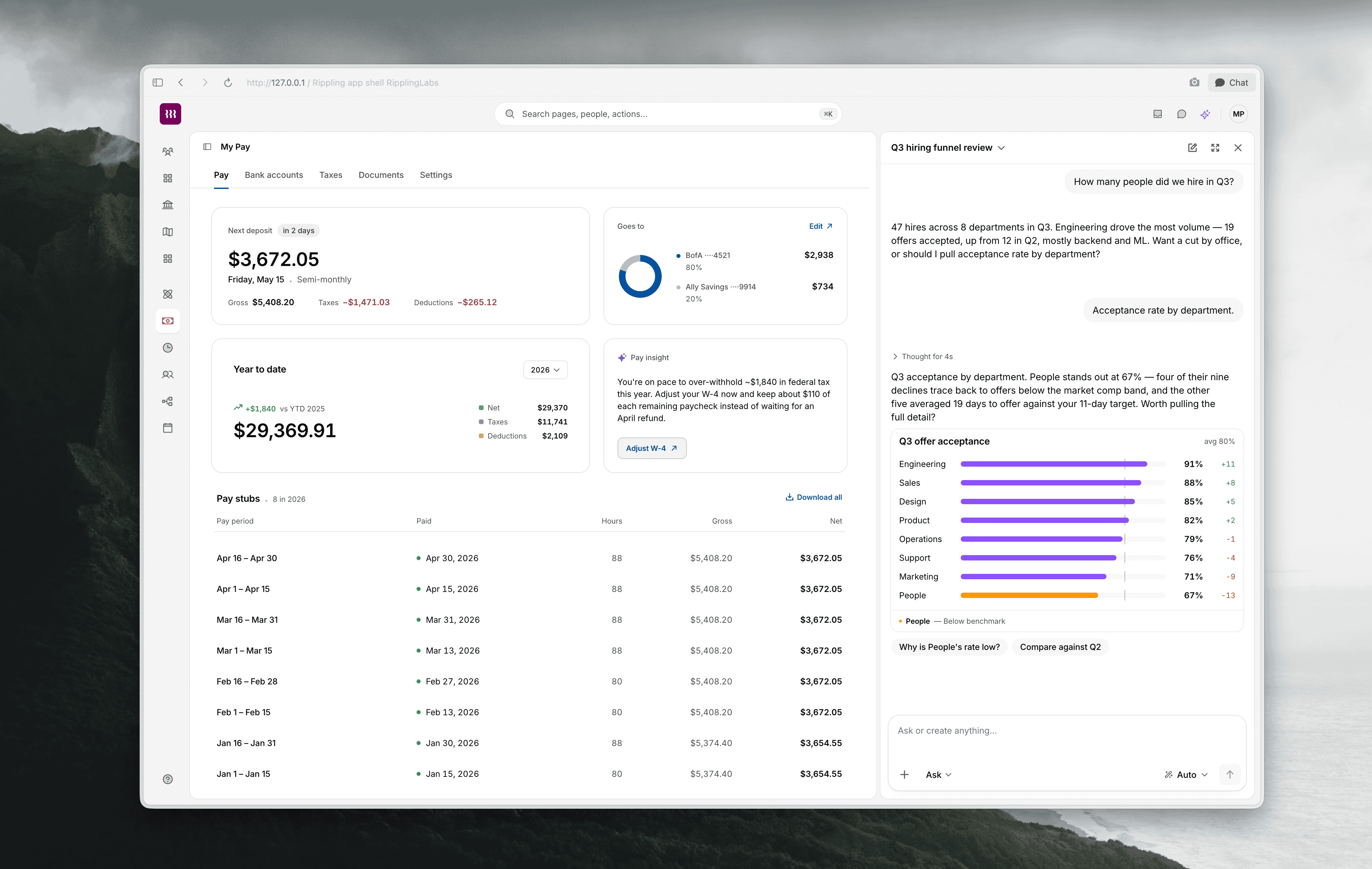
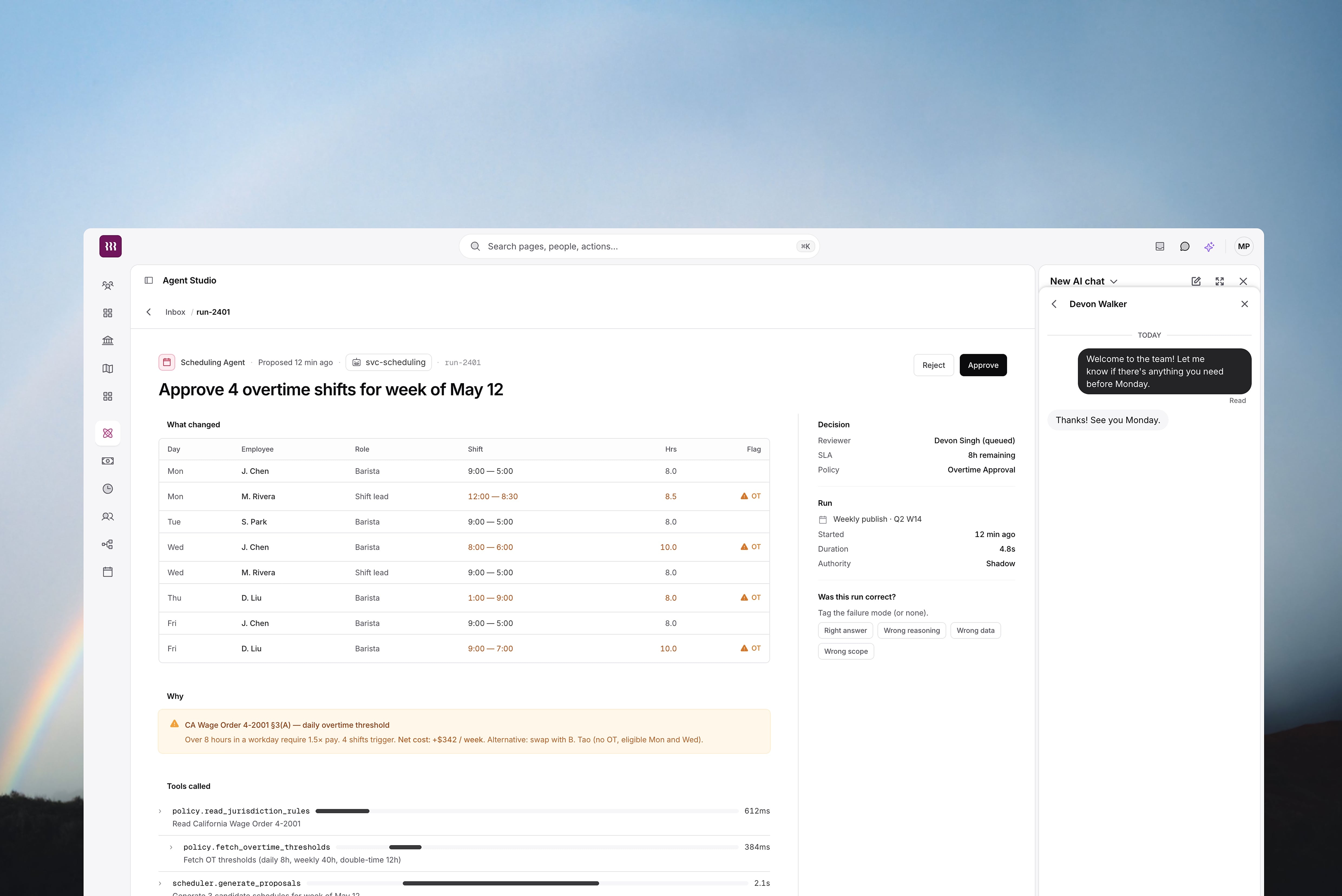
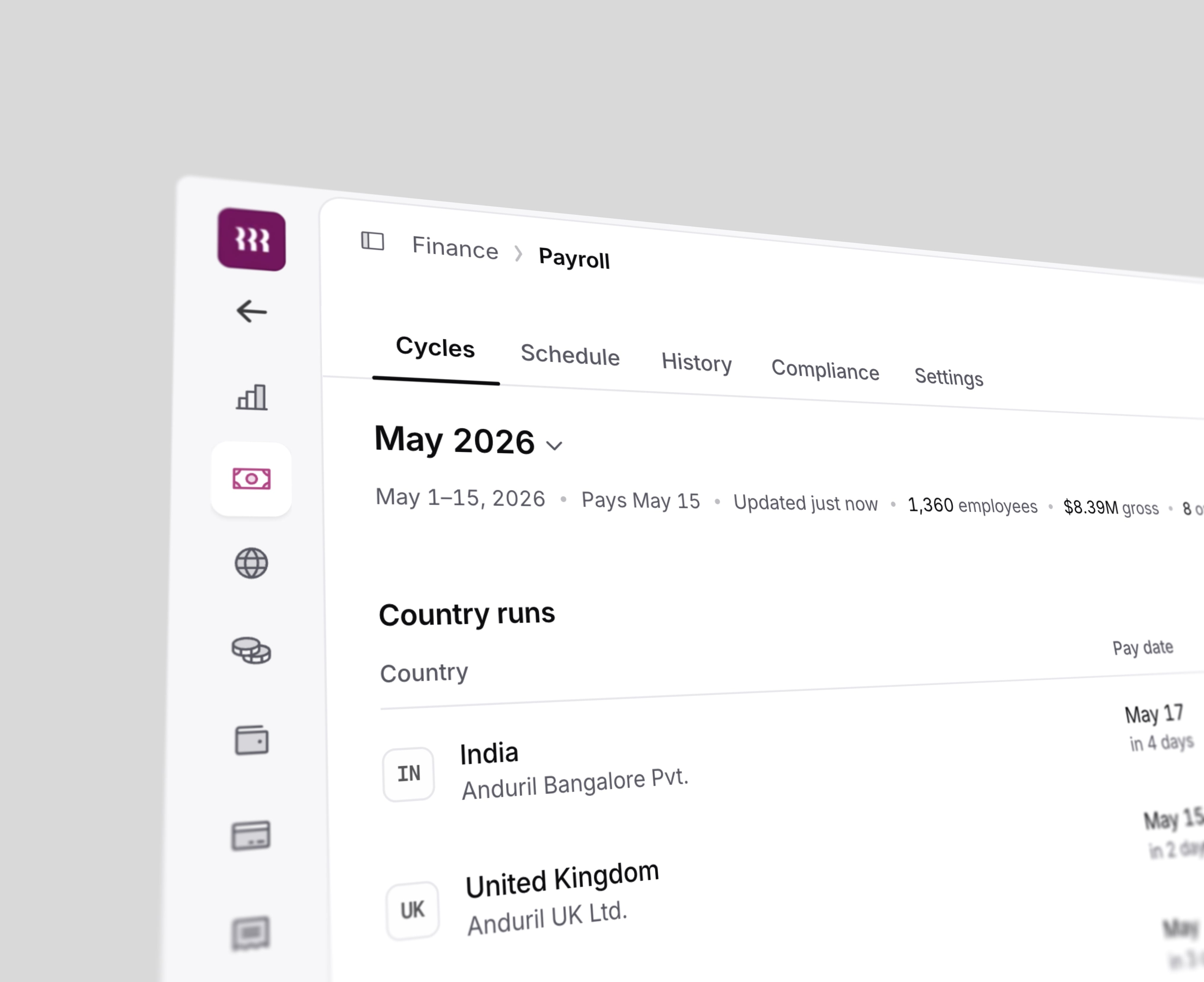
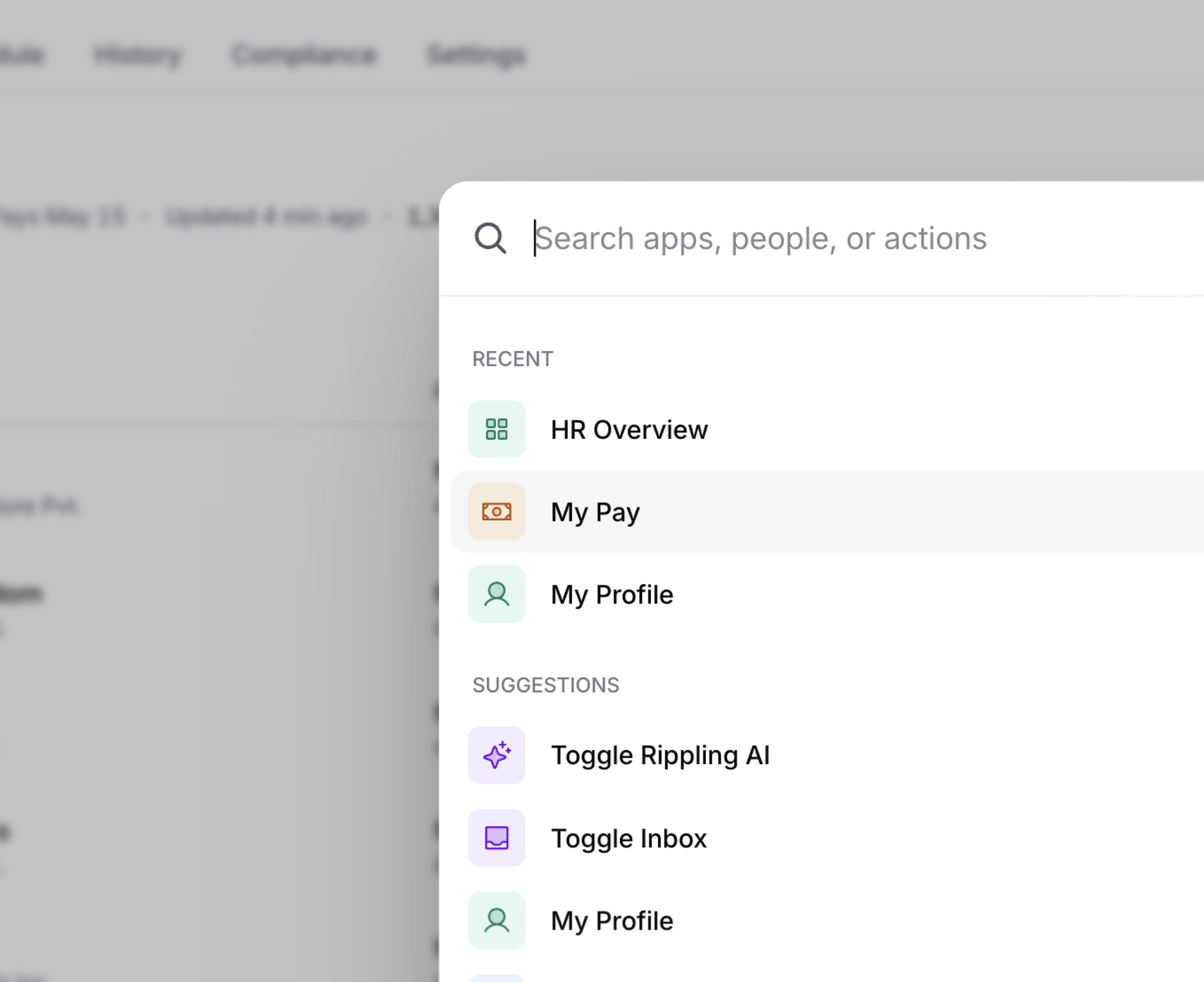
The composable shell architecture across Rippling's product suite
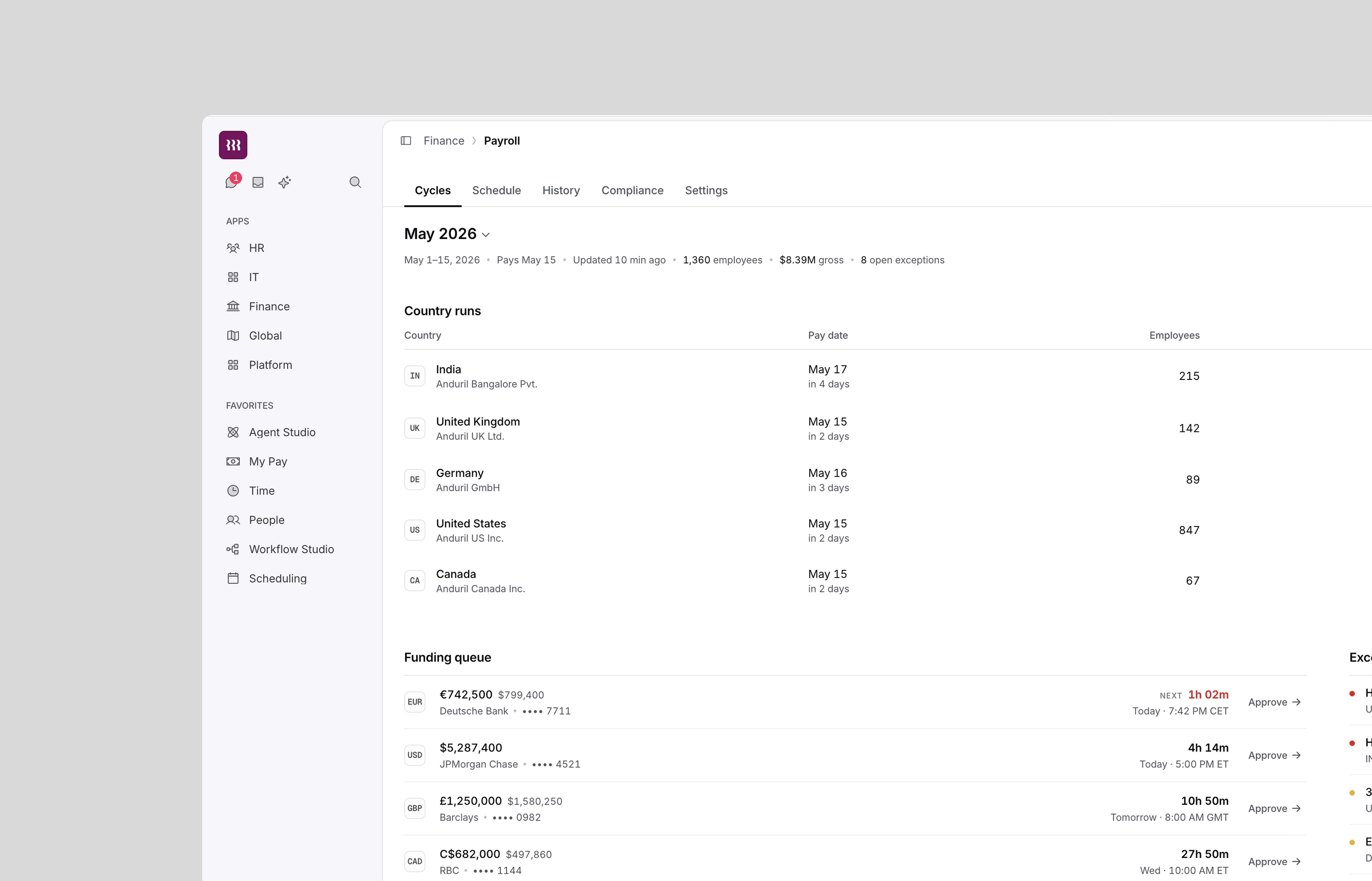
Finance › Payroll — multi-country run with funding queue
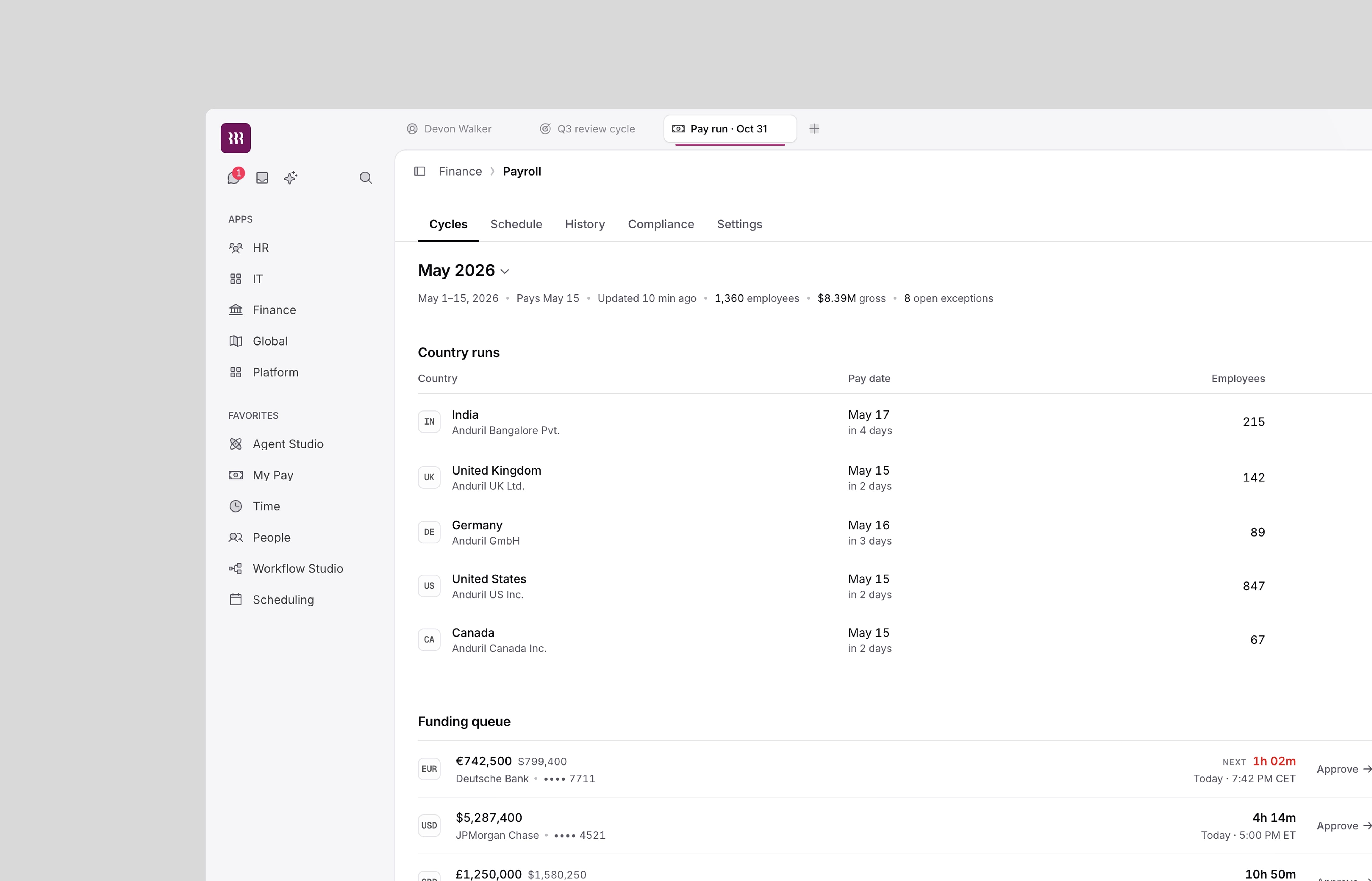
Pinned context tabs let users hold multiple workflows simultaneously
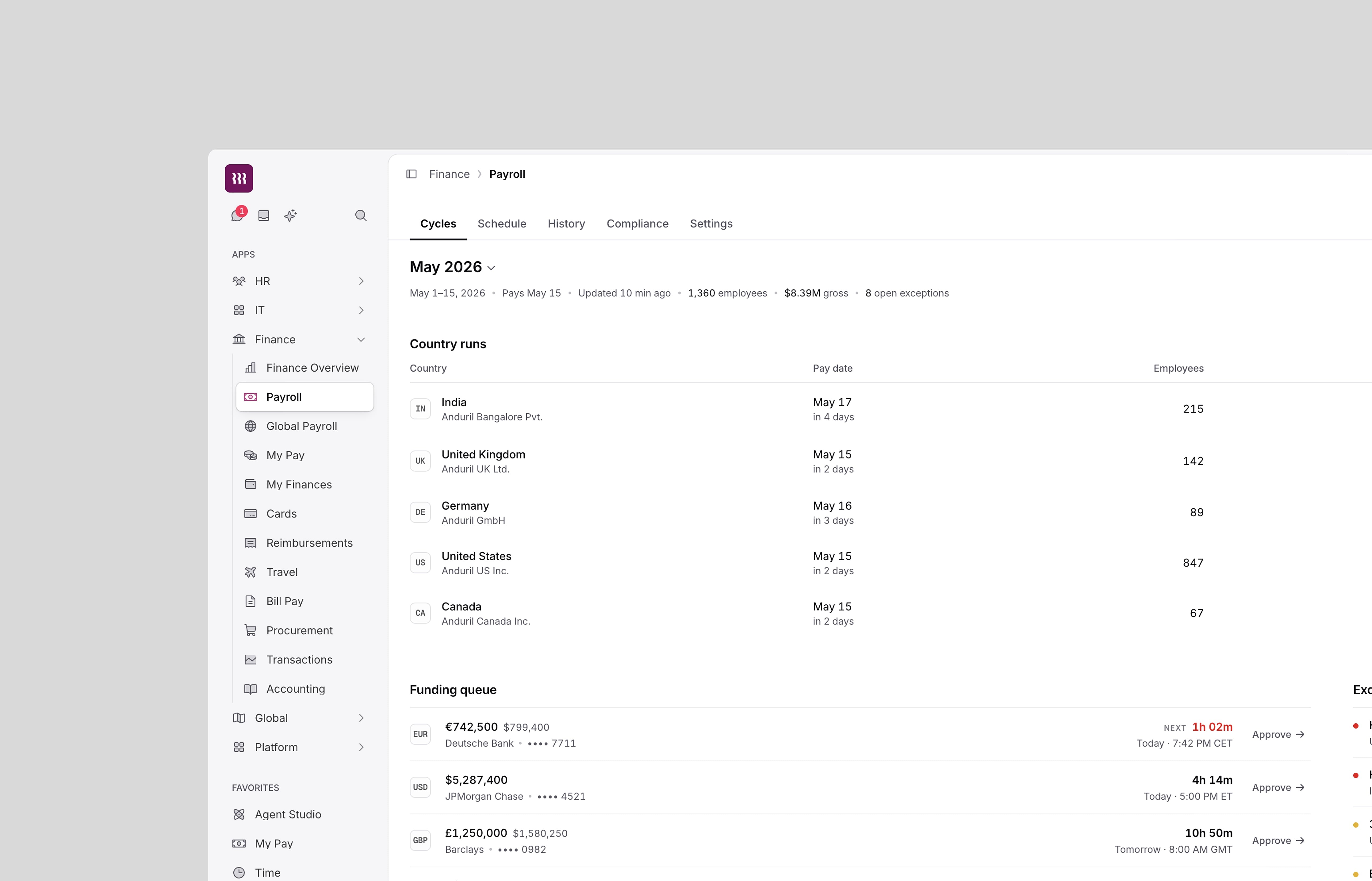
Finance L1 expanded — 12 sub-products, zero additional navigation overhead
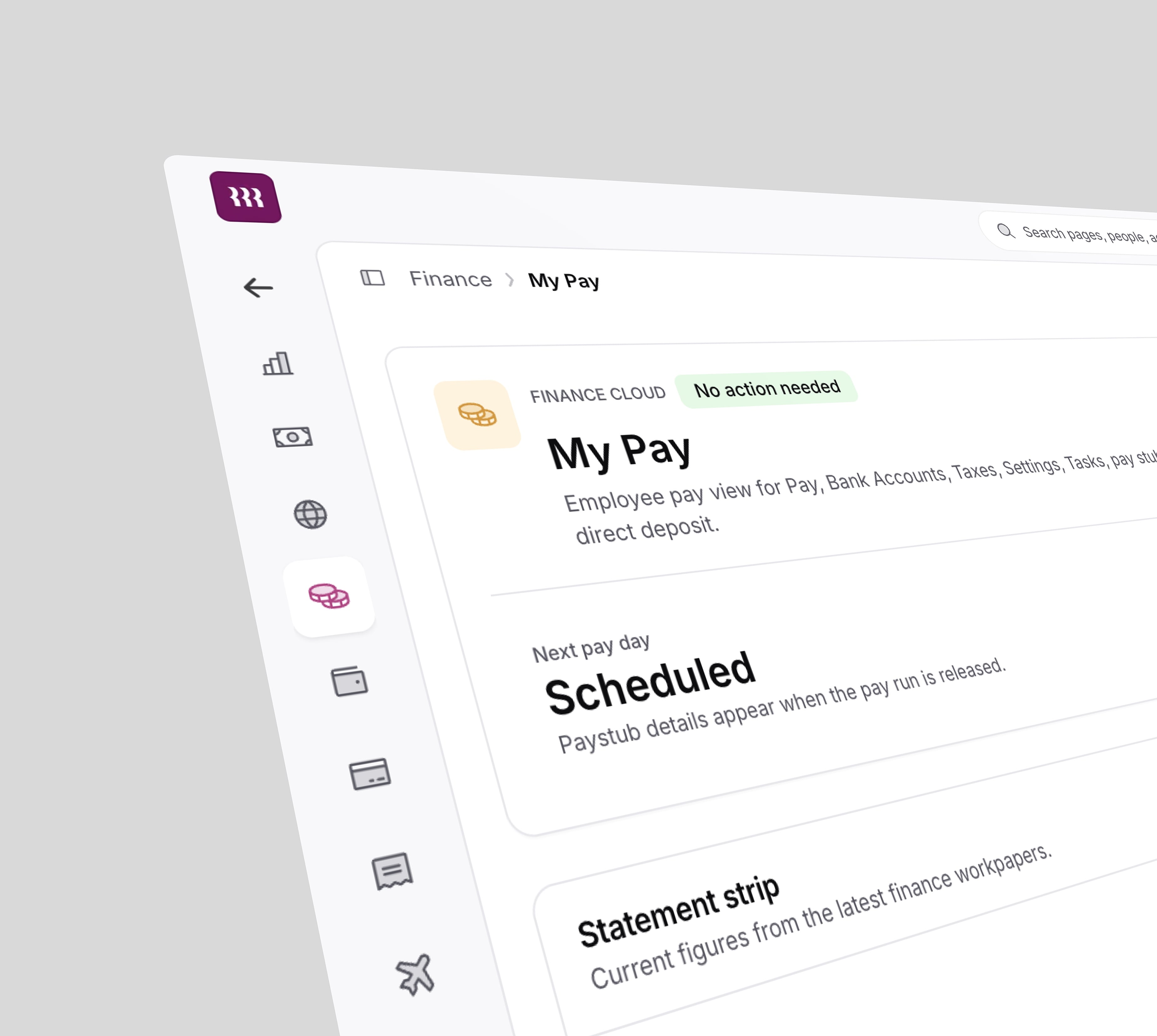
Finance › My Pay — shell chrome minimal, content dominant
The navigation problem
Rippling had grown to 20+ products — but the navigation still reflected how the company was built, not how customers thought about their work. Products were merchandised as standalone apps. HR was HR. Payroll was Payroll. Finance was Finance. Customers who needed to move across them had to carry a mental map of how Rippling organized itself internally.
Consistency wasn't the problem. The harder work was reorganizing what the navigation said — grouping and surfacing products around how customers thought about their work, not how Rippling was built.
That meant collapsing 20+ top-level entry points into five domains: HR, IT, Finance, Global, and Platform. Within Finance alone: payroll, global payroll, cards, reimbursements, travel, bill pay, procurement. All discoverable from the same L1 node, with no additional navigation overhead. The breadcrumb — Finance › Payroll — replaced the old need to know where inside Rippling you'd landed.
Customers stopped asking "where do I find X" and started asking what they could do with it.
Global frame: persistent navigation shared across all 20+ products
The composable architecture became the template for every new product launch at Rippling, cutting average time-to-ship by roughly 30% because teams no longer had to build navigation or settings infrastructure from scratch. "Where do I find X" support tickets fell by 34% in the first quarter after launch.